
County Commission
Morton County Board of County Commissioners
Commissioners


Meeting Dates & Time
Meeting Dates
Second & Fourth Mondays of the Month
(Dates Subject to Change)
Meeting Time
8:00 AM until finished
Break for lunch at Noon
Meeting Location
Morton County Courthouse
1025 Morton St., Elkhart, KS
⚠ Special Commissioner Meeting
Monday, June 15th at 9:00 AM — To Canvass votes of the Special Election 2026 and go over procedures.
County Commission
The Morton County Commissioners are vested by Kansas State Statute with both legislative and administrative powers and duties. These powers and duties include:
- Supervision of county property
- Organization of townships following statutory procedures
- Control of the financial affairs of the county
- Approval of the annual budget
- Levying of county taxes
- Designation of depositories for the county treasurer
- Construction and maintenance of county roads and bridges
- Approval of land use and zoning policies for the county
- Issuance of bonds
- Awarding of contracts
- Incorporation of cities
- Creation of special districts
- Setting of salaries of all county officials
- Providing a jail, courthouse, office space, and supplies for all county officers and the district court
- Appointment of members of various boards and commissions
Code of Ethical Conduct for County Commissioners
As amended and approved by the KCCA membership on November 25, 2003
The opportunity to serve the public as county commissioner is a high honor and confers a sacred trust to the office holder. Stewardship of the public trust not only requires allegiance to the law, but also obligates a county commissioner to act in ways consistent with the highest standards of ethical conduct.
View the Full Code of Ethics (PDF)Principle 1
A county commissioner should be vigorously dedicated to the democratic ideals of honesty, openness, and accountability in all public matters involving county government.
Principle 2
A county commissioner should model decorum, respect for others, and civility in all public relationships.
Principle 3
A county commissioner should actively practice stewardship of the county's human, fiscal, and material resources.
Principle 4
A county commissioner should strive for excellence and continuous learning in personal development and in all operations of county government.
Principle 5
A county commissioner should perform the duties of public office with fairness and impartiality so as to enhance public confidence in county government.
Principle 6
A county commissioner should neither seek nor accept any favor from any source which may be offered to influence his or her official decision making.
Commissioner District Maps
City of Elkhart
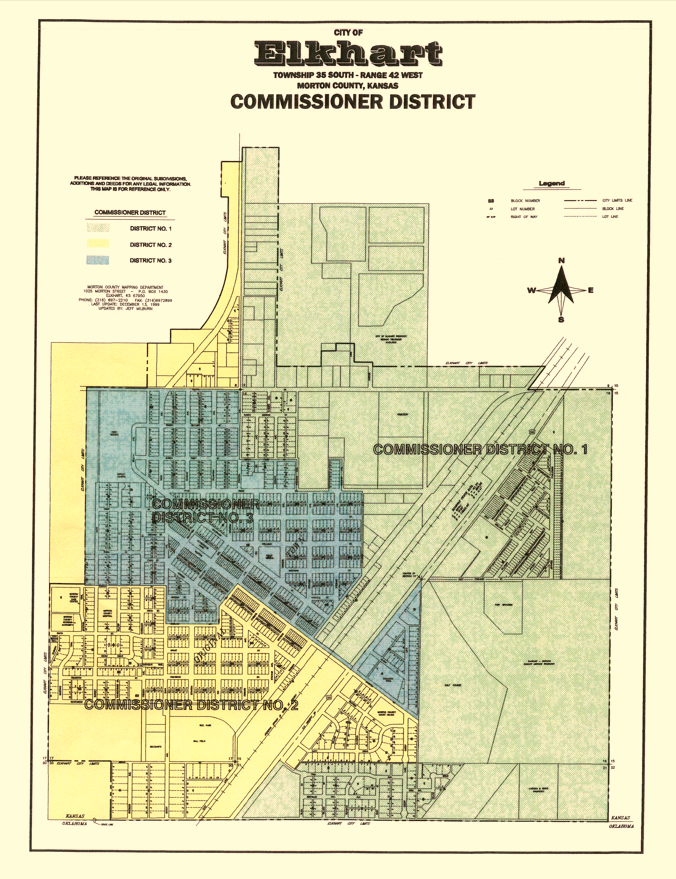
Click to enlarge
Morton County
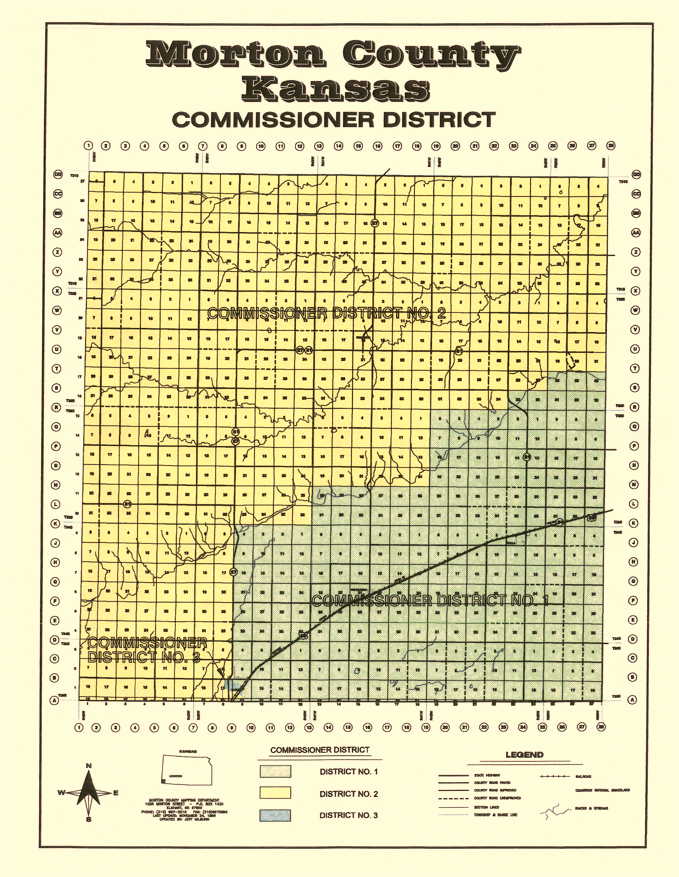
Click to enlarge